

What I Learned at the U.S. Book Show (and why it matters for your book)
What do you learn from a day and a half spent with 700 publishers, suppliers, authors, and media professionals?
A lot! And yes, much of it was AI related.
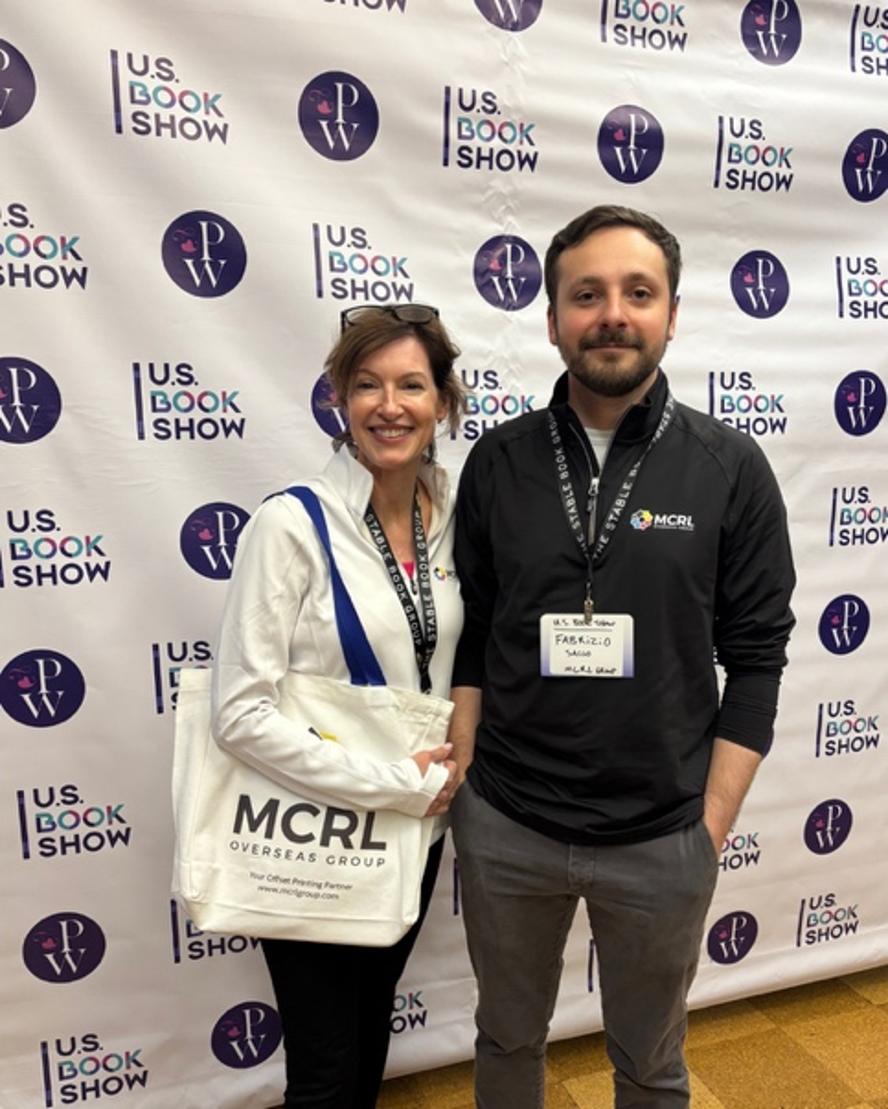
Fab and I attended the Publishers Weekly sixth annual U.S. Book Show in New York City on June 2–3, 2026.
With 19 panels, workshops, and presentations, industry leaders tackled some of the biggest challenges and opportunities facing publishing today.
Here are my key author relevant takeaways.
From SEO to GEO: Making Your Book Discoverable in the Age of AI
One of the most actionable sessions I attended was led by publishing consultant Cameron Lennon, who specializes in Amazon sales and discoverability.
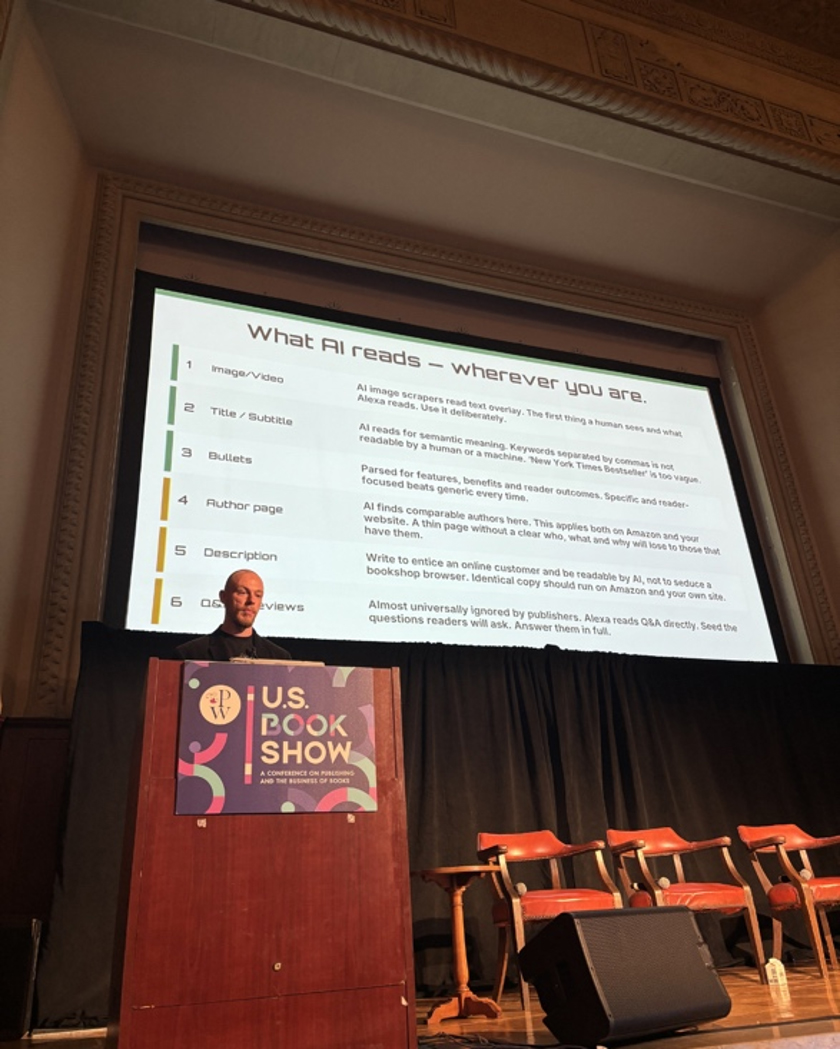
This presentation focused on the shift from Search Engine Optimization (SEO) to Generative Engine Optimization (GEO), making your content visible and citable when AI tools are generating recommendations and answers (I had to google that!).
As Lennon explained, readers aren't making purchasing decisions the way they used to.
ChatGPT, Claude, Gemini, and Amazon's AI-powered shopping assistant, Rufus, are being used increasingly for book recommendations, whether readers realize it or not.
Some practical ways to improve GEO include:
- Ensure AI bots can access and crawl your website
- Use structured data and schema markup to help AI understand your content
- Maintain consistent book descriptions across platforms, including Amazon and your author website
- Create Reddit and YouTube content
- Invest in video content, AI search increasingly prioritizes rich media
- Add text overlays or captions to videos so content can be indexed more effectively
- Use bullet points that explain features, benefits, and “The Why!” for readers
- Optimize your author page by clearly communicating who you help, what problem you solve, and which authors or books readers may compare you to
Amazon Description Tips
Amazon continues to invest heavily in AI, making optimized book descriptions more important than ever.
Rather than stuffing listings with keywords, authors should focus on providing context, clarity, and intent. AI systems are increasingly evaluating meaning and relevance rather than simply matching keywords.
Additional recommendations included:
- Include at least one short video in your listing
- Use multiple high-quality images (seven is ideal)
- Include at least one review
- Consider Amazon A+ Content, which is becoming more prominent in the customer experience
- Seed common reader questions and answers where possible, as conversational AI prioritizes this information
My key takeaway: discoverability is becoming less about algorithms and more about providing useful, structured information that AI can confidently recommend.
AI's Growing Impact on Publishing
AI surfaced in nearly every session.
One statistic that stood out to me: approximately 3.5 million books were published last year, but only about 600,000 came through traditional publishing houses.
The influx of AI-generated content is creating both opportunities and challenges. Publishers expressed concerns about content quality, intellectual property protection, and the limitations of AI-detection tools. Many authors remain understandably cautious about uploading manuscripts into third-party systems.
On the positive side, publishers are increasingly using AI to improve operational efficiency. AI tools can help automate workflows, streamline administrative tasks, improve discoverability efforts, and connect authors and publishers with professionals who best fit their genre and goals.
Content Creation Over Corporate Speak
A recurring theme throughout the conference was that discoverability today is increasingly relationship-driven vs primarily driven by technical algorithms.
Polished content and all things “corporate-looking” are out, declared Lisa Sharkey, SVP and Publisher at Harper Influence.
Authors were encouraged to focus on:
- Authenticity
- Consistency
- Community engagement ie meaningful conversations with readers
"If you're only showing up to sell something, you're going to get lost," noted Karen Kang of BookTok.
Panelists also highlighted the value of engaging in online comments, where readers can engage in direct interaction with authors.
Crowdfunding platforms such as Kickstarter were discussed as valuable tools not only for funding projects but also for validating demand and building reader communities before publication.
Raising Readers: PSA Campaign
Children’s book professionals shared strategies for creating awareness and action to counter the decline in pleasure reading among young people.
Moderator Aidan Flax-Clark of the New York Public Library cited data from the 2023 National Assessment of Educational Progress showing that only 14% of students reported reading for fun, down 13% from 2012.
The Raising Readers initiative was launched to educate parents on the importance reading plays in a child’s literacy development, vocabulary and lifelong learning.
The campaign includes:
- A letter in books with reading resources for families
- Donations of Little Free Libraries to underserved communities
- Industry-wide collaboration among dozens of publishers
To support this campaign, visit joinraisingreaders.com
Panelists also talked about meeting readers where they are. Not to be snobby about books, as all books are great.
As one speaker put it, there are many ways to become a reader.
The Continued Rise of Audiobooks
Although I didn't attend the audiobook-specific sessions, this topic appeared throughout the conference program.
Several trends were highlighted:
- Audiobook consumption continues to grow
- 3% increase in audio books with ages 0-5
- Audio can be particularly effective for language learning and literacy development
- Stories began as an oral tradition, so audiobooks are a natural evolution and engaging way to share your story
For authors and publishers, audiobook editions are increasingly becoming an important component of a book’s marketing and monetization strategy.
The "anti-screen" movement is growing with some publishers recognizing this by expanding into other printed products, including journals, puzzles, card and board games.
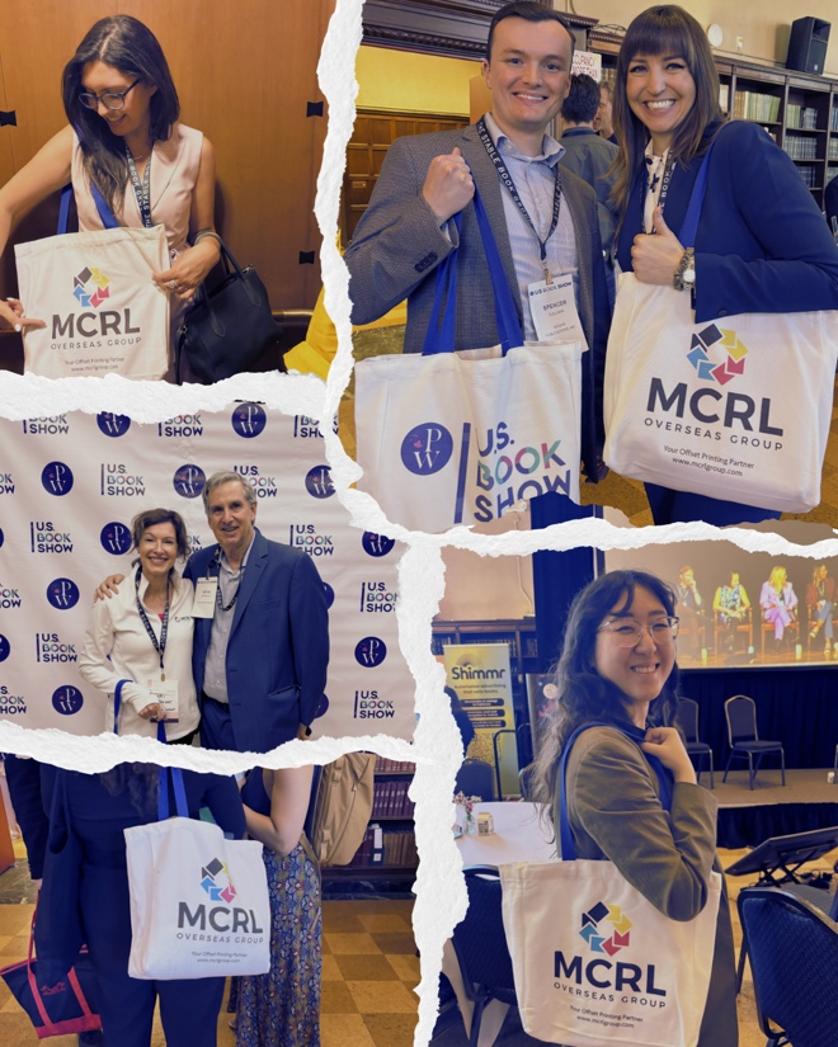
It was pretty darn cool to see MCRL’s logo on all the awesome book bags!
Final Thoughts
The tech may be changing but the U.S. Book Show reinforced to me that at the end of the day, readers really want great stories, useful information, and a sense of connection.
I hope you found a few insights in here that can strengthen your book marketing!
Have a Question? Feel free to reach out to Lori at lorim@mcrlprinting.com
